

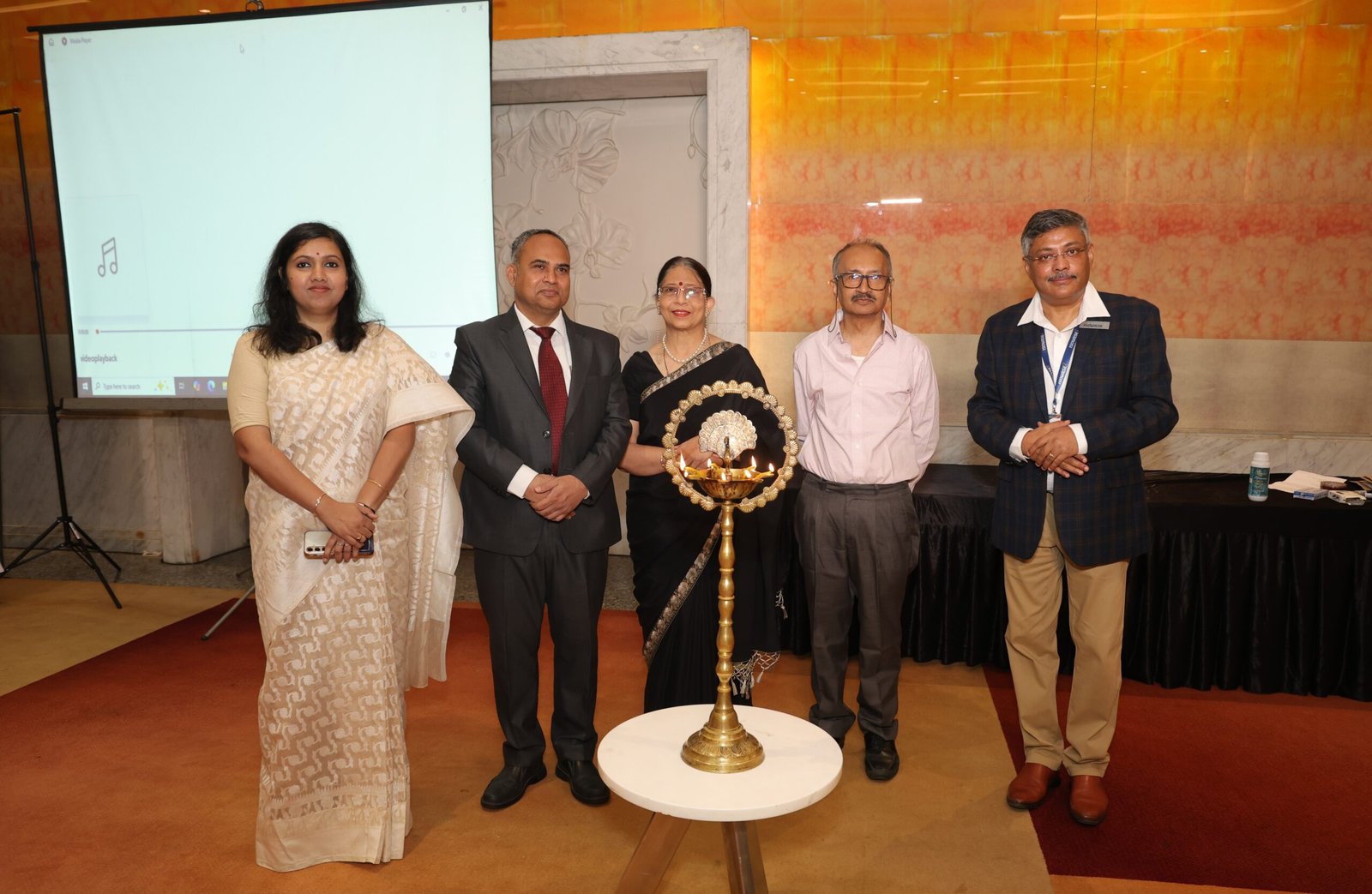
Isourse Technologies has launched an AI-integrated Computable General Equilibrium (CGE) model, marking a significant step towards strengthening data-driven economic decision-making and building India’s own capability in advanced economic modelling.
The launch was unveiled during the grand finale of the national-level hackathon AlgosQuest’25, bringing together industry experts, policymakers, and participants from across India.
The newly introduced model enables the simulation of the economy-wide impact of policy decisions before they are implemented. Built on India’s official economic datasets, it allows governments, corporates, think tanks, and research institutions to assess how changes such as tax reforms, trade policies, or global economic shocks affect industries, households, and overall economic outcomes.
Globally, countries such as Australia have long relied on established Computable General Equilibrium frameworks to support policy planning and economic decision-making. Similar systems are used across major economies, including the United States, the European Union, and China, where they are integrated into trade, fiscal, and industrial policy processes. In contrast, India, despite being the world’s fifth-largest economy, growing at over 7 per cent annually, and supporting a population of over 1.4 billion, lacked an accessible, India-specific platform built on its own data. This meant that many complex policy decisions were taken without a clear, economy-wide view of their impact.
A CGE model is an advanced economic simulation tool that acts as a virtual representation of an entire economy. It captures how sectors such as agriculture, manufacturing, services, trade, households, and government interact with each other, and traces how a policy change creates ripple effects across production, employment, income, and consumption. Often described as a “flight simulator for the economy,” it allows policymakers to test high-impact decisions in a simulated environment before implementing them in the real world.
At its core, the platform combines India’s Social Accounting Matrix with an artificial intelligence engine that simplifies data processing, scenario simulation, and result interpretation. What traditionally required years of specialised effort and remained limited to a small group of experts can now be executed more efficiently through a user-friendly SaaS interface, enabling institutions to evaluate multiple policy scenarios and trade-offs in a shorter time.
Commenting on the launch, Raj Banerjee, Founder and Managing Director, Isourse Technologies, said, “For a country of India’s scale and complexity, the challenge has not been intent, but access to the right tools. Economic decision-making has often relied on fragmented or inaccessible systems. This platform is an attempt to change that by building capability within India, using India’s own data, so that decisions of national importance can be evaluated with far greater clarity and independence.”
Adding to this, Dr. Chetana Chaudhuri, Fellow, National Council of Applied Economic Research (NCAER), said, “The ability to test policy scenarios before implementation can significantly improve the quality of economic decision-making. Whether it is evaluating a new trade agreement, assessing the impact of a tax change, or understanding how a global shock may affect domestic sectors, such tools enable stakeholders to move from reactive analysis to more informed, forward-looking planning.”
The platform can simulate a wide range of real-world scenarios, including Union Budget proposals, Free Trade Agreements, global economic shocks, and sectoral policies such as Production-Linked Incentive schemes. It also enables analysis of how such decisions affect different sectors, employment levels, and household income groups, helping policymakers better understand trade-offs before implementation.
The platform offers a SaaS-based solution and is designed to support evidence-based decision-making aligned with national priorities such as Make in India, Digital India, and the broader push towards data-driven governance. By enabling institutions to evaluate policy trade-offs in advance, the model aims to improve the quality and effectiveness of economic planning in India.
Looking ahead, Isourse Technologies expects early adoption among research institutions and industry bodies, with potential integration into policy planning frameworks over time, positioning India among a select group of nations developing advanced, AI-integrated economic modelling capabilities.
Send news announcements/press releases to:
editor@thefoundermedia.com
About The Author