
1. AI is transforming the workplace at an unprecedented pace. Do you believe AI will replace jobs, or will professionals who effectively leverage AI gain a significant competitive advantage in the future workforce?
I’ve been thinking about this question for the last couple of years, and honestly, I think we’re asking the wrong question.
When the internet arrived, people asked: Will it kill traditional businesses? Some businesses died, but many thrived. The latter figured out how to use the internet to their advantage, not just talk about it.
AI is the same. The professionals who will struggle aren’t those without a CS degree; they’re the ones playing the waiting game right now. At NextLeap, I see this every day. Our students who treat AI as a thinking partner, using it to research, synthesise, and build, are landing roles faster and earning more. The companies hiring have already decided that they need AI-skilled talent. It’s just that most people haven’t caught up yet with this reality.
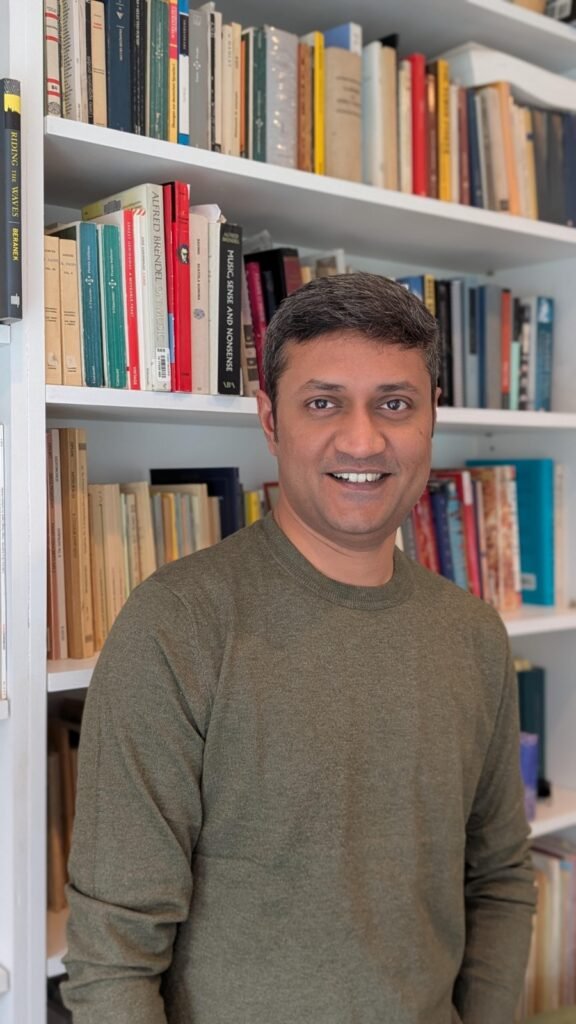
Arindam Mukherjee, Co-Founder & CEO, NextLeap
2. As AI becomes increasingly integrated across industries, why is it important for professionals beyond technology roles to develop AI literacy and practical AI skills?
Your job title might say “Marketing,” or “Operations,” or “Finance,” but your actual job is decisions and communication. And AI changes both.
I didn’t come from a CS background. Fifteen years in the technology space, and the most important skill I developed wasn’t coding; it was knowing how to work with people who could build things. AI is the new version of that. You don’t need to train models. You need to know how to use them, prompt them well, and spot where they’re wrong.
AI literacy is fast becoming the new English proficiency. It’s the baseline expectation in any professional environment. The professionals who skip the thinking “it’s for engineers” will find themselves managed by the ones who didn’t.
3. Traditional degrees alone are often no longer sufficient to meet evolving industry requirements. How is the definition of employability changing in the age of AI, and what skills will be most valuable in the years ahead?
I’ll tell you what I see in the companies that hire from NextLeap. They’re not asking “where did you study?” anymore. They’re asking, “What have you built? What problems have you solved? Show me.”
A degree signals that you can complete something. What employers want now is proof that you can create value in conditions of ambiguity, with incomplete information, real constraints, and changing tools. That’s a fundamentally different bar.
Employability today is about demonstrated capability, not certified knowledge. The candidates who get hired are the ones who can walk into a room and say: here’s a problem I diagnosed, here’s what I tried, here’s what worked. A transcript can’t say that, but a strong portfolio can. Resumes tell the recruiter what you have done in the past, and a portfolio of work tells the interviewer the skills you actually possess and what you can do in the future.
4. With information and learning resources more accessible than ever, why do mentorship, project-based learning, and real-world application remain critical for career growth and professional success?
Information is not the bottleneck. YouTube has everything. But knowing what to watch next, how to apply it, whether you’re on the right track, that’s where people get lost. The gap between consuming content and actually developing a skill is enormous, and it doesn’t close without feedback.
Mentorship shortens that gap dramatically. A good mentor doesn’t just teach; they calibrate. They tell you when you’re overthinking, when you’re ready to move on, when your reasoning has a blind spot. Projects force you to confront what you don’t know in ways that no course can manufacture. That discomfort, worked through with guidance, is where real learning happens.
At the end of the day, learning is not a product of the teaching. True learning is the product of the activity of a learner, and AI has exposed the state of learning.
5. Looking ahead, what advice would you give to students and early-career professionals seeking to build resilient, future-ready careers in an increasingly AI-driven world?
The people I see struggling the most are the ones who want to master the “right” skill before they start. The landscape shifts too fast for that to be a strategy.
Here’s what actually works: pick a direction, build something real in that space, get feedback from someone who’s already there, and keep iterating. That cycle, build, show, learn, repeat, is what compounds.
And on AI specifically: don’t just consume it, use it to produce. Write with it, research with it, build with it. The professionals who will be most valuable aren’t those who know the most; they’re the ones who can move fastest from idea to execution. AI is a force multiplier for that.
At the end of the day, your career is a long game of at least 30 years. But the moves you make in the next 12–18 months, the skills you build, the projects you ship, the mentors you seek out, those will determine which side of the divide you’re on when AI reshapes every industry it touches. So, stop waiting and start now.
Enjoyed this interview? Now imagine yours. Write to:
jeevika@thefoundermedia.in
About The Author