
What inspired you to launch TeamTrace, and what problems are you solving for businesses?
The inspiration behind TeamTrace came from seeing organizations struggle with multiple disconnected tools for project management, time tracking, productivity monitoring, and workforce scheduling. This often-created data silos, increased software costs, and limited visibility into team performance.
So, we put together TeamTrace as a unified platform that kind of pulls together project management, attendance tracking, productivity monitoring, resource allocation, budget control, and even field operations all in one place. What makes it different is that we pair enterprise-grade capabilities with affordability, and it starts at only $3 per user. Teams using TeamTrace have said they can get up to 2.2 more productive hours per employee, and they also see clear gains in project profitability and better, faster decision-making.
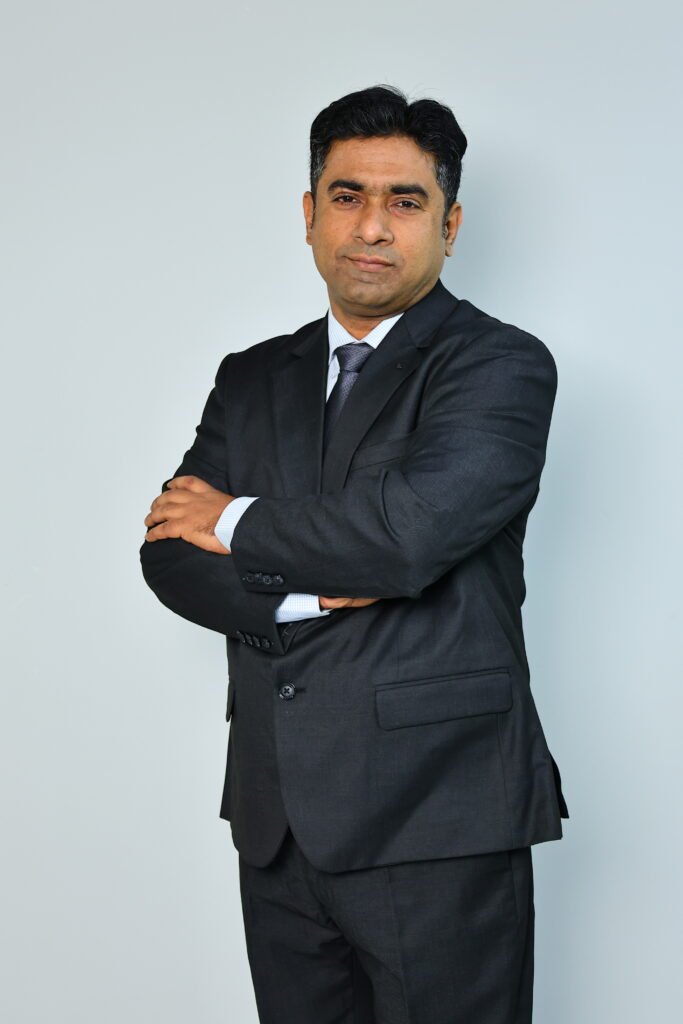
Amitabh Roy, Founder, TeamTrace
How is AI changing the way organizations manage their workforce and productivity?
We are seeing this deep, fundamental shift in how organizations think about productivity. AI is not just being used to automate tasks anymore, it is kind of turning into a decision support layer that assists leaders in understanding workforce performance in real time. In hybrid and distributed setups, the old ways of tracking performance and project progress often fail to provide a complete picture. AI helps connect that gap, by examining work patterns, project activities, how resources are used, and even productivity trends, all at a larger scale.
From there, AI is pushing workforce management beyond simple observation to smarter workforce optimization. It can help organizations spot bottlenecks, uncover productivity opportunities, estimate resource needs ahead of time, and also make project execution smoother through practical insights. Managers get a more accurate view of how teams perform, while employees tend to see a better workload balance and calmer, more streamlined workflows.
The real thing about AI is that it sort of turns huge stacks of work-related data into suggestions that actually make sense and can back up business results. Rather than spending hours putting together reports, or doing manual activity tracking, leaders can move their attention toward more strategic initiatives, employee growth and learning. And since companies keep running into changing workplace realities, AI driven workforce intelligence will become important for boosting productivity, tightening operational efficiency, and helping organizations stay more adaptable, and resilient too.
What are the biggest challenges companies face in managing remote and hybrid teams today?
Organizations are starting to move away from measuring employee activity more toward outcomes, real impact, and actual business contribution. Remote and hybrid work models have, on one side, brought more flexibility and wider access to talent, but on the other, they also bring fresh management hurdles. One of the biggest things organizations run into right now is keeping some level of visibility into work without overstepping and disrupting employee autonomy. A lot of leaders find it hard to see project progress, team capacity, productivity levels, and resource utilization in real time, especially when people are spread across multiple locations.
Then there’s the other major issue, alignment and accountability. When face-to-face check-ins happen less often, communication gaps can quietly appear, and that can cause delays, duplicated effort, and even missed deadlines. Managers end up spending serious time collecting updates, monitoring progress, and coordinating between teams which, in turn, pulls them away from strategic priorities.
Also, employee engagement along with workload balance is getting more attention. Without the right tools and insights, organizations might miss early signals of burnout, or that a workload is unevenly distributed, or productivity is slowly slipping, until it finally starts affecting business outcomes in a noticeable way. Fixing all of this takes more than basic collaboration tools. Organizations need a smart workforce visibility approach that blends project tracking, productivity intelligence, and workforce analytics. That gives leaders the ability to decide with more confidence, boost operational efficiency, and build a work environment that feels more connected and accountable, no matter where employees are actually working from.
How does TeamTrace help businesses improve employee productivity without micromanagement?
At TeamTrace, our philosophy is that productivity should be driven by clarity, accountability, and data, not micromanagement. One of the biggest misconceptions in workforce management is that higher productivity requires constant oversight. In reality, employees perform best when they have clear goals, visibility into priorities, and the autonomy to manage their work effectively.
TeamTrace helps organizations achieve this balance by providing real-time insights into projects, tasks, resource allocation, and work patterns. Instead of focusing on monitoring individuals, the platform enables managers to understand overall team performance, identify bottlenecks, and track project progress through objective data. This allows leaders to address challenges proactively and provide support where it is needed most.
For employees, TeamTrace creates greater transparency around expectations, workloads, and deliverables, helping them stay aligned with organizational goals. AI-powered insights further assist managers in making informed decisions related to capacity planning, productivity improvement, and project execution without relying on frequent check-ins or manual reporting.
Why is it important for companies to have work management and workforce management on a single platform?
In many organizations, work management and workforce management kind of live in different systems, so you get fragmented visibility, and leaders have a hard time linking business outcomes with workforce performance. While one platform may track projects and tasks, another monitors employee activities, and then managers have to combine the whole picture together from multiple sources before they can decide anything properly.
When work management and workforce management are brought onto one single platform, those silos basically disappear, and one coherent view of how the work is progressing, how resources are being utilized, and where productivity gains can happen. Leaders can not only see what projects are getting delivered but also see whether teams have the capacity, the exact skills, and the support that’s needed to hit those desired outcomes.
This convergence is super critical for modern organizations. If you combine project tracking, workforce insights, productivity analytics, resource management, and AI-driven intelligence all in one place, businesses can move quicker and make more informed decisions. It also lowers the administrative overhead, boosts collaboration, and keeps teams more aligned with organizational objectives.
In the end, a unified platform helps organizations shift away from treating tasks and people separately, toward managing performance in a holistic way, which drives higher productivity, better resource utilization, and stronger business results.
How do Scrum and Kanban frameworks help organizations improve project execution and team collaboration?
Scrum and Kanban have become important because they help companies bring more structure, transparency, and overall agility into how work actually gets done. In today’s fast-paced business environment, teams really need to adapt quickly when priorities shift but at the same time stay in sync and keep everyone accountable. Both frameworks offer a proven way to hit that kind of balance, even when things get messy.
Scrum helps teams cut larger, complex projects into smaller, manageable sprints, with goals that are defined up front, timeboxes, and responsibilities that are clearly owned. That sets up continuous feedback, quicker choices, and regular check-ins on progress so teams can spot issues early and resolve them. Kanban, however, leans more on seeing the workflow clearly and managing work in progress. In practice, this helps teams fine-tune the process, lower congestion, and improve overall delivery efficiency, like it’s supposed to.
From the collaboration side, both methods create better sightlines into tasks, priorities, and dependencies. Team members end up knowing what needs to happen, who is on point, and how their day-to-day work maps back to the wider business aims. That usually boosts communication, strengthens accountability, and supports cross-functional coordination in a way that feels less chaotic.
We view Scrum and Kanban as real drivers of operational excellence. And when you pair them with real-time workforce intelligence and project visibility, organizations can speed up delivery, raise productivity, and form teams that are more cooperative and highly performing.
What are some common productivity gaps that businesses often overlook?
One of the most common productivity gaps that businesses often overlook is this, they do not get enough visibility into how time and resources are really being used. A lot of companies focus on outcomes only, like the final report is all that matters, without looking at the hidden stuff that actually affects performance. So, then problems like uneven workloads, too much context switching, random unplanned work, and inefficient processes end up coming around. They tend to stay unnoticed until the moment they start hitting project schedules and business results.
Another challenge that’s easy to miss is the amount of time employees spend on administrative tasks, quick status updates, and meetings. Sure, these things are required, but they can quietly drain the hours that should go toward higher-value work that drives results. At the same time, managers often end up collecting data and tracking progress by hand, rather than using that time for strategic choices and team growth. It becomes this weird loop of “keep checking, keep measuring” instead of actually improving.
Also, organizations sometimes underestimate communication gaps and unclear priorities. When teams do not share the same view on goals, ownership, or what a project is supposed to deliver, productivity can drop, even if people are working hard the whole day.
How can workforce intelligence help leaders make faster and better business decisions?
Workforce intelligence gives leaders a kind of real time, data driven sight into how work is being carried out across the whole organization, and it helps them decide faster, with better clarity. In a lot of businesses, decisions end up getting dragged out, because the most important bits of information like where projects really stand, how teams are performing, how resources are used, and even productivity levels can be set in different systems. Or they’re collected manually, which slows everything down a lot more than people expect.
When these signals are pulled together, workforce intelligence reflects broader and more coherent picture of organizational performance. Leaders can spot productivity patterns, resource limitations, project risks, workload imbalances, and those operational chokepoints early, before they turn into bigger business impact.
What measurable business outcomes have organizations achieved through TeamTrace?
Organizations today are always under pressure to improve productivity, optimize resources, and wrap up projects more efficiently. What makes TeamTrace stand out is that it can translate workforce and project data into measurable business outcomes, which in turn affects organizational performance directly.
From what we have seen from customer experiences, companies using TeamTrace have reported gains in productive daily work hours roughly 50 minutes up to 2.2 hours per employee. This is largely because the platform delivers sharper visibility into work patterns, helps streamline workflows, and it makes it easier to spot and remove productivity bottlenecks, sooner rather than later. We also noticed that managerial productivity could rise by as much as 2.1x since leaders end up spending less time on manual reporting, status tracking, and that kind of administrative coordination.
And then there is more than productivity. TeamTrace has also supported organizations with project execution and resource utilization, which ties back to project revenue growth in the 12% to 31% range. Also, with real-time workforce intelligence on hand, the whole decision process becomes about 23% to 35% faster, so leaders can adjust their actions when business priorities shift. So, basically these outcomes make it clear that workforce intelligence is no longer just an operational instrument as it is more like a growth catalyst for the business.
What trends do you foresee, shaping the future of workforce management and workplace productivity?
The future of workforce management is going to be shaped by the convergence of AI, workforce intelligence, and outcome driven performance models. As organizations keep embracing hybrid, and distributed work settings, leaders will end up leaning on real time insights more than the usual management techniques, in order to grasp productivity, collaboration, and overall business results.
One of the bigger shifts is adopting AI powered workforce intelligence platforms. These tools can predict resource needs, catch productivity bottlenecks, propose corrective moves, and also help to accelerate decisions. Companies will probably drift away from retrospective reporting, and go toward predictive and prescriptive analytics, so they can get ahead of operational problems. A second key change will be in how organizations measure outcomes, instead of just tracking activity.
We also expect work management and workforce management to become increasingly integrated. Organizations will seek unified platforms that provide a complete view of projects, people, productivity, and performance in one place. At TeamTrace, we believe the future belongs to organizations that can combine technology, data, and human potential to build more agile, productive, and resilient workplaces.
About The Author