
Quality Engineering has traditionally been viewed as a downstream function, but AI is rapidly changing that perception. How is the role of Quality Engineering evolving from validation support to a strategic business driver?
In the AI era, Quality Engineering cannot remain a downstream validation function. As enterprises become increasingly AI-driven and digital-first, quality directly influences customer trust, regulatory readiness, operational resilience, and brand credibility. Regulators, stakeholders, and customers are no longer asking whether systems work; they are asking whether they are reliable, transparent, explainable, ethical, and trustworthy.
This shift positions QE as a strategic business function rather than an operational afterthought. Enterprises can no longer depend on large, costly, reactive, and unsustainable post-development remediation cycles. Modern QE must become predictive, governance-led, and embedded early within enterprise decision-making.
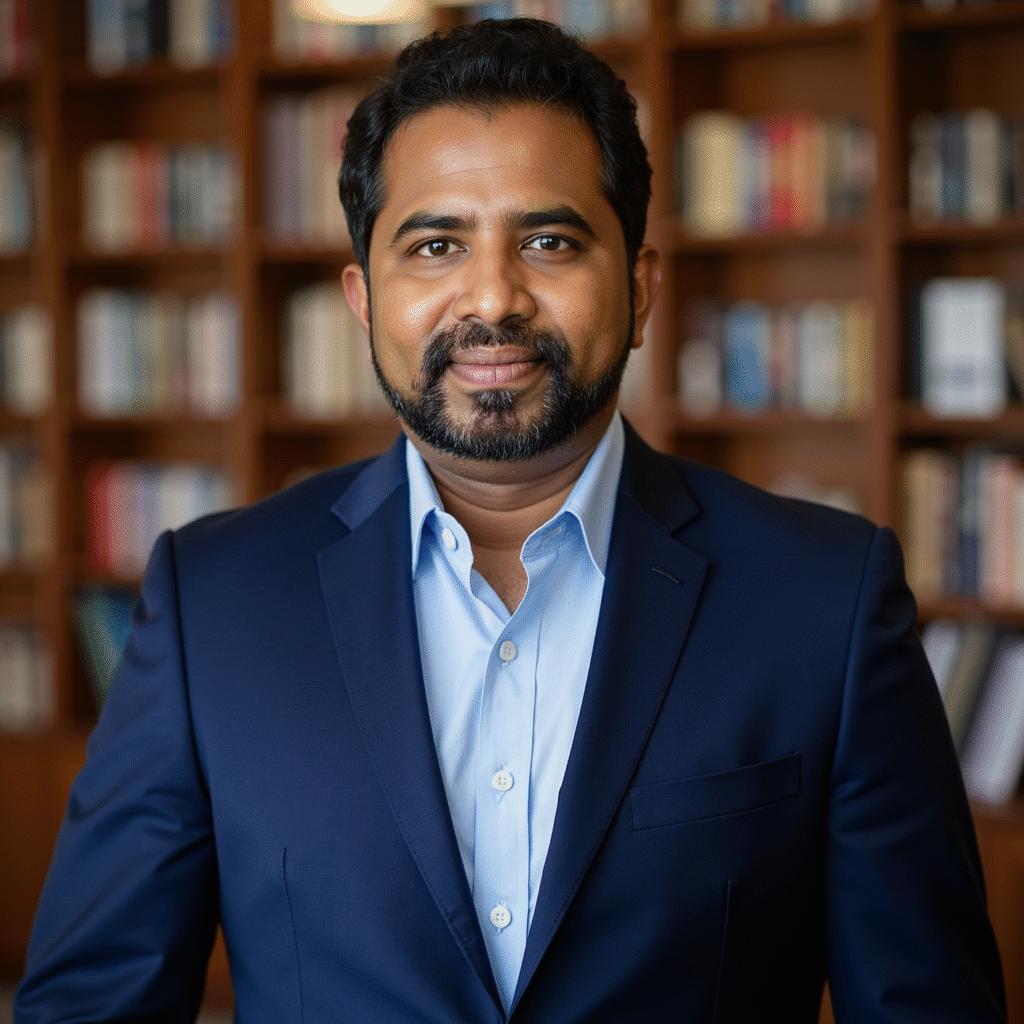
Pradeep Govindasamy, Co-Founder, President & CEO, QualiZeal
At QualiZeal, we call this evolution “Quality Intelligence”, where AI-powered QE and QE for AI converge to validate both traditional and non-deterministic systems continuously and at scale. Our approach combines intelligent automation with human expertise to address the realities of AI systems where accuracy, fairness, accountability, and risk management cannot be left to automation alone.
QE in the AI age will handle scale, speed, and operational complexity. Human creativity, judgment, and domain knowledge can be redirected toward innovation, strategic decision-making, and areas where enterprises create real competitive advantage.
As enterprises move towards autonomous and agentic AI systems, what becomes the biggest challenge in building trust, governance, and resilience into continuously learning environments?
Enterprises today are no longer operating deterministic systems with predictable outcomes. They are deploying probabilistic AI systems that continuously learn, evolve, and make dynamic decisions. The challenge is that AI adoption is accelerating far faster than AI governance.
At the same time, many organizations struggle to move AI initiatives beyond the pilot stage because they cannot establish measurable trust, governance, resilience, or business ROI. That is where the real risk lies.
Building AI systems fast is an engineering challenge. Trusting AI decisions on a scale is a validation challenge, and traditional testing and governance models were never designed for systems that demand continuous assurance across explainability, compliance, observability, ethics, reliability, and accountability.
The complexity increases further because AI systems do not operate in isolation. They interact with enterprise data, APIs, legacy platforms, workflows, and human decisions. Trust cannot be established solely by testing outputs. It requires continuous validation across the entire AI lifecycle.
That is why we believe the future of enterprise AI will be proof-driven, not just AI-driven.
At QualiZeal, this philosophy shaped our “QE for AI” approach and platforms like ValidAIte™, built through dedicated research and real-world enterprise learnings to help organizations identify AI failure points early, strengthen governance and audit readiness, and establish measurable trust in AI systems at scale.
Building an AI-native Quality Engineering company within a highly competitive technology ecosystem requires both speed and long-term vision. What were some of the critical mindset shifts needed while scaling the organisation from an emerging player to a globally recognised brand?
One of the biggest mindset shifts was recognizing very early that the future would not reward companies built only on workforce scale. It would reward organizations capable of combining intelligent systems with intelligent people.
That required us to think differently from the beginning.
We were not trying to build another traditional IT services company. We wanted to build an AI-first, platform-driven Quality Engineering organization capable of solving enterprise trust challenges in increasingly intelligent systems.
Another important shift was learning to operate in two worlds simultaneously. Enterprises still need operational excellence and execution rigor today, while also preparing for AI-native operating models of the future. Companies that ignore either side struggle.
We also invested heavily in workforce AI readiness. Many organizations talk about AI transformation externally, but scaling it internally requires cultural reinvention, continuous learning, and responsible adoption frameworks.
Most importantly, we believed AI should amplify human expertise, not replace it. That philosophy shaped how we built our platforms, teams, and long-term innovation strategy.
Scaling sustainably required balancing speed, trust, discipline, and adaptability together.
Among the many enterprise transformation engagements handled over the years, what is one instance where the original strategy had to significantly evolve during execution, and what shaped those decisions and course corrections along the way?
One important lesson we learned during enterprise transformation engagements is that AI readiness is often overestimated in the early stages.
In one large transformation program, the initial focus was on accelerating automation and introducing AI-led Quality Engineering capabilities. However, once execution began, it became clear that the larger challenge was not the AI layer itself; it was the underlying enterprise complexity.
The client environment included fragmented workflows, inconsistent data structures, disconnected systems, and operational dependencies that limited scalability. We had to pause parts of the original roadmap and redesign the approach around data readiness, governance visibility, process simplification, and integration resilience before expanding AI-driven capabilities.
That experience reinforced something we strongly believe today: enterprise AI transformation is not simply a technology implementation exercise. It requires foundational modernization, operational alignment, and trust frameworks that can support continuously evolving systems.
The course correction ultimately improved adoption, reduced operational risk, and created a more scalable long-term transformation model.
In many ways, the success of AI transformation depends less on AI ambition and more on enterprise preparedness.
With increasing investments in AI-led automation platforms, how is the balance maintained between intelligent systems and human expertise in the future of Quality Engineering?
I do not believe the future belongs to AI alone. I believe it belongs to organizations that can combine intelligent systems with intelligent human judgment responsibly.
AI will absolutely transform Quality Engineering through automation, predictive insights, intelligent orchestration, and accelerated validation. We are already seeing significant gains in productivity, speed, and operational efficiency.
But enterprise technology is ultimately built around people, decisions, accountability, and trust. Human expertise remains critical for contextual reasoning, ethical judgment, governance interpretation, business understanding, and risk evaluation, especially as AI systems become increasingly autonomous.
At QualiZeal, we view AI as a productivity amplifier rather than a replacement for engineering expertise. That philosophy shaped both our platforms and our workforce strategy.
We invested heavily in AI fluency, continuous learning, and enterprise AI readiness because the nature of work is evolving, not disappearing. The engineers who succeed in the future will be the ones capable of working effectively alongside intelligent systems.
The goal is not human versus AI. The goal is to build trustworthy systems where AI acceleration and human accountability work together.
Enjoyed this interview? Now imagine yours. Write to:
jeevika@thefoundermedia.in
About The Author