

With your strong focus on AI, cloud, and cybersecurity integration, how do you ensure that security is embedded at the ideation stage rather than retrofitted later?
Security has to start as a design principle, not a deployment activity. The mistake many organisations still make is treating security as a final review before go-live. By then, the architecture, workflows, and data flows are already fixed, which makes protection slower, more expensive, and often less effective.
Our approach is to bring security, architecture, and business intent into the same conversation from the beginning. That means threat modelling at the concept stage, defining trust boundaries early, building identity, access, and data protection into the architecture, and ensuring that every new use case is assessed for privacy, resilience, and operational risk before it is built. In modern environments, especially those involving AI and cloud, security has to sit inside innovation.
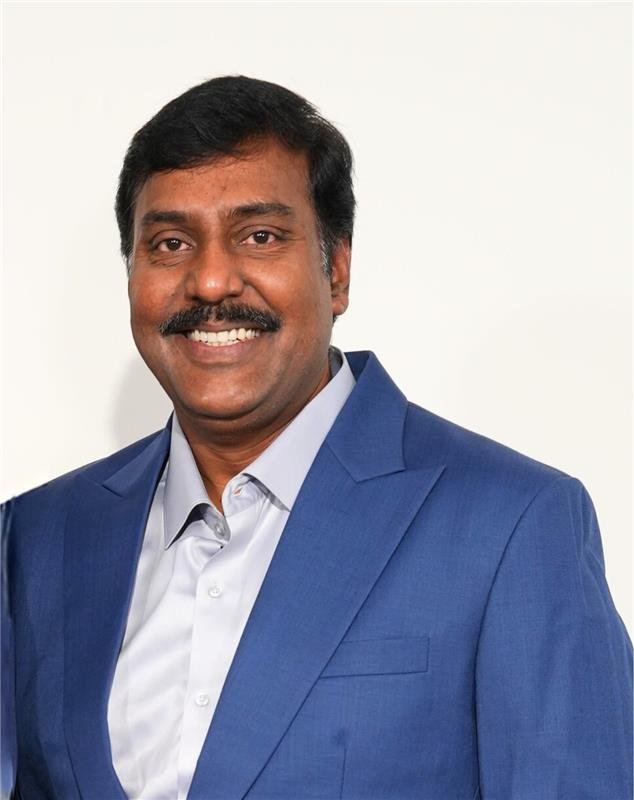
Vinod Babu Bollikonda, Group CEO, Blue Cloud Softech Solutions Limited
The most resilient systems are those designed with protection built into their core architecture, transforming security from a reactive control into a strategic enabler of scale, speed, and organisational confidence.
When modernizing legacy systems into cloud-native or AI-driven architectures, what are the most critical security gaps organizations overlook?
The biggest gaps usually appear in the transition layer, not the end state. When organisations modernise legacy systems, they often focus on migration speed, application refactoring, or AI enablement, but underestimate what happens to identity, data, interfaces, and monitoring during the shift.
The most common overlooked areas are weak identity and entitlement design, inconsistent data classification, exposed APIs, poor secrets management, and a lack of visibility across hybrid environments. Legacy systems often carried their own implicit controls, but once workloads move into cloud-native or AI-enabled architectures, those controls must be redesigned, not assumed.
Another blind spot is operational fragility. Many teams build for functionality but not for containment, recovery, or forensic readiness. In a modern environment, security must account for how fast a threat can move, how quickly it can be detected, and whether the organisation can isolate impact without disrupting the business.
Modernisation ultimately becomes a redesign of enterprise trust, where cloud transformation, AI adoption, and cybersecurity maturity must advance together as a single integrated strategy rather than separate initiatives.
What frameworks do you follow to ensure responsible and secure AI deployment, especially in regulated sectors?
In regulated sectors, responsible AI cannot be left to policy statements alone. It has to be built on a framework that combines governance, explainability, validation, and human accountability. Our starting point is that every AI use case should answer four questions clearly—what it is allowed to do, what data it can use, who owns it, and how it is monitored once it is live.
From there, we look at model risk, data quality, access control, bias exposure, auditability, and the potential business impact of failure. In practice, this means setting clear approval thresholds, maintaining traceability across the data and model lifecycle, using human-in-the-loop controls for high-risk decisions, and continuously testing behaviour in production rather than assuming the model will remain stable.
For regulated environments, the framework must also map to the relevant compliance and assurance expectations of the sector. The point is not to treat compliance as an afterthought, but to make it part of the operating model for AI.
Responsible AI is ultimately measured not by a model’s capability but by the level of trust an organisation can safely place in its outcomes—marking the difference between experimentation and true enterprise deployment.
How does Blue Cloud Softech approach data sovereignty and localization, especially in government and enterprise deployments?
Data sovereignty is no longer a narrow legal issue; it is a strategic design requirement. In government and enterprise environments, the question is not only where data resides, but who can access it, under what jurisdiction it is governed, and how control is maintained across its lifecycle.
Our approach is to design for localization, control, and policy alignment from the outset. That means understanding residency requirements, defining access boundaries, applying encryption and tokenization where needed, enforcing role-based controls, and ensuring that sensitive data is handled in a way that aligns with the client’s regulatory and operational obligations. In large deployments, sovereignty also depends on architecture choices: how data is segmented, how workloads are hosted, and how visibility is maintained without creating unnecessary exposure.
For public-sector and regulated enterprise use cases, trust depends on the ability to prove that data is not only secure but also governed in a way that respects local requirements and organisational accountability.
In data-sensitive environments, sovereignty extends beyond storage location to encompass control, accountability, and enforceable governance—particularly as organisations operate across increasingly distributed cloud and hybrid ecosystems.
With cyber threats becoming more sophisticated, how do you design systems that anticipate threats rather than react to them?
The shift has to be from reactive defence to continuous exposure management. Threats today are not waiting for perimeter defences to fail; they are exploiting identity weaknesses, misconfigurations, exposed services, third-party dependencies, and human behaviour. So, designing for anticipation means assuming that some form of exposure will exist and building systems that can detect, isolate, and respond before that exposure becomes material.
This begins with visibility. You cannot anticipate what you cannot see. From there, you need continuous asset awareness, attack surface monitoring, behavioural analytics, threat intelligence, and automated response paths. But equally important is operational discipline: security controls must be tested, monitored, and updated continuously, not just reviewed periodically.
The organisations that are most resilient are the ones that combine prevention with readiness. They know where their critical assets are, what abnormal behaviour looks like, and how to contain an incident without waiting for manual intervention.
Modern cybersecurity is defined less by perfect prevention and more by early visibility, rapid containment, and sustained resilience—making systems significantly harder to exploit and far quicker to recover.
How is Blue Cloud Softech preparing for a future where every system is interconnected and continuously exposed?
The future enterprise will not be a closed environment. It will be interconnected, distributed, API-driven, AI-assisted, and always exposed to some degree of risk. Preparing for that future means designing for resilience rather than assuming isolation. Security has to become adaptive, continuous, and architecture led.
Our focus is on building systems where identity, data protection, monitoring, response, and governance work together as a connected control fabric. In a continuously exposed environment, the goal is to reduce attack paths, improve detection speed, strengthen containment, and ensure that critical services remain dependable under pressure.
That requires cross-functional thinking. Cybersecurity can no longer operate as a standalone function; it has to be embedded across cloud, AI, data, and application layers. It also requires organisations to move from episodic assurance to continuous assurance, where systems are assessed, monitored, and improved in real time.
In an always-connected digital environment where resilience becomes the new perimeter, the organisations that succeed will be those able to innovate rapidly without compromising trust, control, or operational continuity.
-Auhtor Vinod Babu Bollikonda, Group CEO, Blue Cloud Softech Solutions Limited
About The Author