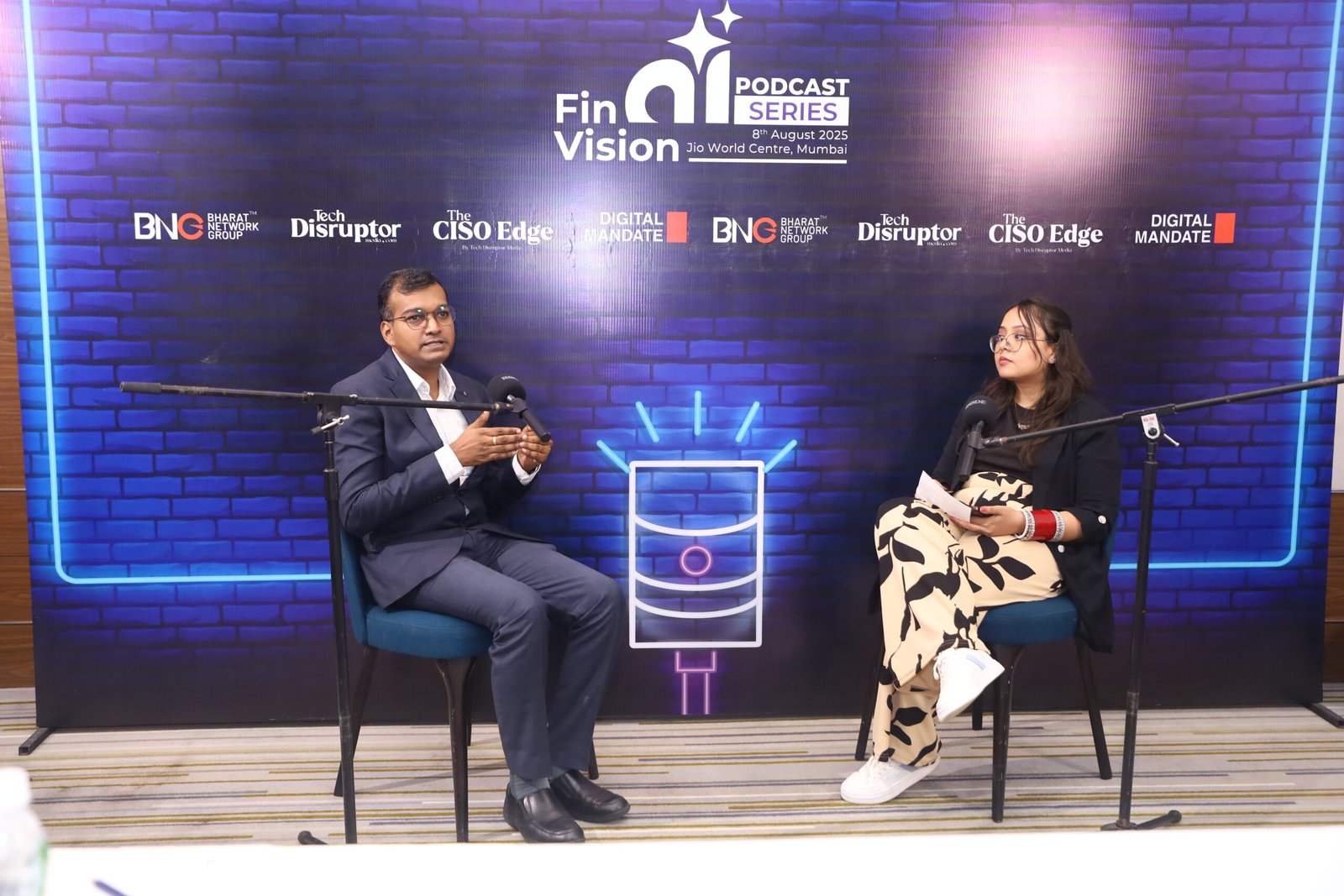

How is AI changing the way procurement leaders define value beyond traditional cost savings?
Savings still matters. Anyone who tells you otherwise hasn’t sat through a CFO review.
But the question the business asks procurement has changed. It used to be “what did you save against last year’s price?” Now it’s also “how fast did you get there, and how sure are you that you picked right?” Those are different questions, and the second one is harder to answer with a spreadsheet.

Abhinav Khare, Vice President – Enterprise Services, Beyond Key
Think about a normal RFQ. Five suppliers respond. Five different pricing structures, different lead times, different payment terms, a stack of compliance documents nobody opens. The lowest unit price wins on the summary sheet. And then freight shows up. Or the MOQ is triple what you needed. Or the supplier who quoted 8% cheaper is in Riyadh and your plant is in Dallas, so you’re now holding six weeks of safety stock to cover the transit. A vendor 12% below market on one lane can be 20% above on another, same supplier, different total cost. Net 30 versus Net 60 doesn’t show up on the price line either, but your treasury team feels it.
Here’s the thing. All of that information exists during the event. It’s just buried in attachments and email threads that a buyer with four other RFQs open is never going to read line by line. That’s where AI earns its place, pulling the total cost picture into view while the event is still live, instead of it surfacing in a post-award review nine months later when the contract is signed and nobody can do anything about it.
So the value of conversation shifts. Better decisions. Less risk. The ability to move when a supplier’s situation changes mid-quarter.
What are enterprises getting wrong when adopting AI for procurement, and how important is quality data to success?
The most common mistake is starting with the technology.
Someone raises the question in a steering committee: where can we apply AI? It’s the wrong question. The better one is duller and far more useful. Which procurement decision are we currently making badly, and why? Answer that honestly and the use case names itself. Skip it and you get a pilot that demonstrates well in March and is quietly dropped by August.
On data quality, I’d frame the problem more bluntly than most. It isn’t that procurement data is dirty. In sourcing, there often isn’t data at all. Consider how a typical RFx runs. Requirements in a Word document. Supplier responses as PDF attachments. Clarifications by email. Evaluation in a spreadsheet on one buyer’s desktop, with the scoring logic sitting in that buyer’s head. The event closes, the award is made, and what survives is a folder of documents. Not a dataset.
Context is the second half of the problem and receives even less attention. The ERP holds the purchase order. The spreadsheet holds the scores. The supplier portal holds the certifications. But nothing records that this supplier lost the previous two events on delivery terms rather than price. AI has to understand how those fragments relate to one another and to the event itself. Without that relationship, what you have is a confident summarisation engine.
Then there is the item that rarely appears in the business case. Adoption. A technically excellent tool that requires buyers to abandon the systems they already work in every day will not be used. That is a design failure, not a change management failure.
Our position, then, is that AI belongs inside the workflow rather than alongside it. With ProcureKey, the intent is to bring intelligence into the journey the buyer is already on, from purchase requisition through RFx and bid evaluation to award, instead of adding another interface to log into. Adoption first, data second, AI third. In that order. Reverse the sequence and the AI has nothing real to work with.
How can AI help procurement teams anticipate supplier, pricing and supply risks before they affect operations?
Risk management becomes much more useful when it happens before the sourcing decision becomes irreversible. In many cases, the warning signs are already present in the procurement data.
For example, a supplier may have started missing delivery commitments. Its pricing may be moving outside the normal range. Quality issues may be increasing, or contractual requirements may not be consistently met. None of these signals alone may trigger immediate action. Together, they can tell a very different story.
AI can continuously look across these signals and bring the relevant ones to the procurement team’s attention. It can also compare current supplier behavior with historical performance and sourcing patterns. The important point is that AI should not simply generate another risk score. It should help answer, “What changed, why does it matter, and what should the procurement team investigate?”
That makes risk intelligence actionable. The objective is not a perfect prediction. It is giving procurement teams enough lead time to qualify alternatives, renegotiate terms or change the sourcing strategy before a risk becomes a business disruption.
As procurement moves towards agentic AI, what must enterprises put in place before trusting AI with autonomous decisions?
I would separate AI-assisted procurement from autonomous procurement. They are two different stages of maturity.
Today, there are several areas where AI can already provide strong assistance. It can read supplier responses, compare bids against defined criteria, identify missing information, flag anomalies and produce a recommendation. These are high-value activities because they reduce the manual effort involved in evaluation without removing accountability. Enterprises need clearly defined approval thresholds, role-based permissions, audit trails and escalation rules. They also need to know what data the agent is using and why it reached a particular conclusion.
I would not recommend giving an AI agent unrestricted authority over supplier awards simply because the technology makes it possible. A low-value, rules-based action is very different from awarding a strategic contract. The dividing line should always be risk. The higher the financial, operational or compliance impact, the stronger the human control should be.
With ProcureKey, what key procurement challenges were you aiming to solve, and how does AI transform sourcing and bid evaluation?
The starting problem was not that procurement teams lacked technology. In many cases, they had too much of it. A single sourcing event could involve an ERP for requisitions, email for supplier communication, spreadsheets for bid comparisons, and separate systems for approvals and documentation. That fragmentation creates friction and makes it harder to maintain a consistent evaluation trail.
With ProcureKey, the objective was to bring the sourcing process into one structured environment without forcing teams to completely change how they work. Microsoft 365 and SharePoint foundation ensures that it integrates easily with the existing enterprise technology ecosystem.
Next, AI brings its intelligence to the process. It can organize the RFx requirements, analyze the supplier response, evaluate bids against certain criteria, and identify any anomalies. Importantly, the system is not designed to produce a score that buyers simply accept. Recommendations need context and explainability.
Enjoyed this interview? Now imagine yours. Write to:
jeevika@thefoundermedia.in
About The Author