


As artificial intelligence continues to redefine the way businesses operate and people interact with technology, AI Appreciation Day, observed annually on 16 July, serves as a timely reminder of its growing impact across industries and society.
From healthcare and finance to education, manufacturing, cybersecurity and scientific research, AI has become a driving force behind innovation, helping organisations improve efficiency, accelerate decision-making and unlock new possibilities. AI Appreciation Day celebrates these advancements while encouraging greater awareness of the technology’s growing influence across the world.
Although not an official international observance, AI Appreciation Day has gained recognition among technology companies, researchers, educational institutions and AI communities as a day to acknowledge the contributions of those advancing artificial intelligence and to inspire meaningful conversations about its future.
To mark AI Appreciation Day, industry leaders share their perspectives on how artificial intelligence is transforming enterprises, driving innovation and shaping the future of technology, while emphasising the importance of responsible and human-centric AI.

BG Mahesh, CEO, Sahamati, shared, “AI’s true potential will not be measured by how autonomous it becomes, but by how responsibly it can act on behalf of people. As AI evolves from systems that assist humans to agents that can discover information, make decisions and execute workflows autonomously, trust becomes as important as intelligence. Responsible innovation is no longer just about building better AI models. It is about building the trusted infrastructure that enables AI agents to identify themselves, obtain user consent, operate within defined guardrails and remain accountable for every action they take. At Sahamati Labs, we recently outlined this approach in our framework for AI agents in the Account Aggregator ecosystem, exploring how trusted AI can operate within a consent-based data-sharing architecture. India has already shown the world how Digital Public Infrastructure can enable trusted, population-scale innovation through open and interoperable ecosystems. The next opportunity is to extend these principles to AI, creating trusted digital rails in which identity, consent, governance and interoperability are embedded by design. This is where India can lead again by demonstrating that the future of AI is not just intelligent, but trustworthy, inclusive and built for public good.”

Vamsi Karatam, Founder & CEO, Deepfacts Private Limited, commented, “National AI Appreciation Day is a moment to recognise how artificial intelligence is helping healthcare move from information overload to meaningful clinical understanding. At proRITHM, we believe the true value of AI lies in its ability to support medical expertise, making complex healthcare information easier to interpret and enabling timely, informed decisions. Our focus is on using AI to strengthen remote monitoring and screening capabilities, extend access to specialised insights, and support healthcare professionals in delivering better care across diverse settings. The future of healthcare will be shaped by responsible innovation where technology and clinical knowledge work together to improve accuracy, efficiency, and patient outcomes. AI’s greatest achievement will be measured by how effectively it enhances human expertise and helps make preventive or proactive healthcare more accessible.”

Kamal Kishore Kumawat, Co-Founder & Chief Technology Officer, Edgistify, said, “AI isn’t a threat to human creativity; it’s a catalyst for expanding it. While AI can generate content, originality, intent and lived experience remain uniquely human. As the cost of expression falls, original thinking becomes the most valuable skill. In an AI-driven world, creative professionals will stand out not by producing more, but by exercising better judgement through taste, context and the ability to ask the right questions.”

Anand (Jude) Kannabiran, Vice President, Asia, Delinea, shared, “As we mark National AI Day, it’s worth acknowledging that India is one of the most enthusiastic adopters of agentic AI in the world, and honestly, that doesn’t surprise me. I see this enthusiasm in nearly every boardroom conversation that happens. But research shows that 63% Indian organizations are also accepting more identity risk to fuel AI adoption than almost any other country. The gap between confidence and governance reality is widest here, and that is precisely where attackers will look to gain a foothold. What customers need to keep in mind is that speed without visibility isn’t progress, it’s exposure. Successful organisations will treat identity governance as the foundation that makes sustainable innovation possible. That’s the shift we need to see in the next twelve months and the early adopters will set the pace for everyone else.”

Vivek Ganesh, Regional Vice President, OutSystems India, said, “On National AI Day, I believe that the winners will be those who build intelligent agentic systems thoughtfully and with intention over speed. AI is making enterprise software more complex before making it simpler. I have noticed everyone is over-indexing on the build phase like how fast we can generate code, how fast can we ship an agent, while quietly creating bottlenecks downstream in quality control, security, and maintenance. That’s not a prediction; this is a pattern we are already witnessing across businesses. The focus for the coming year should not just be about building faster and coming up with new frameworks and systems, but also about governing what we have already built. All of which includes the core software, the foundational systems, and the mission-critical applications that enterprises run on. Enterprises that understand this will be able to navigate and monitor smarter with the help of governed agents.”

Marshal Correia, General Manager for India & South Asia, SUSE, commented, “This National AI Day arrives at an interesting time, especially given the recent Fable 5 shutdown, which caused a tidal wave of impact across Indian enterprises all the way to boardroom level. It also raises an urgent and fundamental question: beyond adoption metrics and innovation ROI, who is actually controlling the infrastructure enterprises are building on? Recent developments have brought to light an urgent realization and risk factor. A regulatory decision made elsewhere should not have the power to switch off an organization’s AI operations overnight, with no prior notice. This is clearly not a tenable situation, and it’s precisely why digital sovereignty is crucial. Research shows that 62% of Indian organizations are already investing in sovereign technology initiatives, well above the global average. At the same time, organizations should be architecting open source, so they retain control over how, and where, their applications run. Digital sovereignty means full visibility over how their data is governed, and agility to innovate on their own terms. This freedom of choice is both a hedge against geopolitical risk, and a stronger foundation for long-term resilience.”

Terry Maiolo, Vice President & General Manager, Asia Pacific, OVHcloud, shared, “AI in India and Asia Pacific has moved quickly from pilot to production and enterprises are beginning to ask the harder questions. They want to know where their data sits, who has access to it, and whether the infrastructure underneath stays open and in their control. That’s sovereignty, and sovereignty starts with ownership. We build our own servers, run our own data centres, including one in Mumbai, and by law, we never share customer data with any government or use it beyond what the customer needs. This is the thinking behind how we have approached AI more broadly, from GPU infrastructure to workspaces like OVHai that let enterprises build and deploy AI without giving up control of their data. With India’s data protection framework taking shape, such ownership is what enterprises are actively looking for. On AI Appreciation Day, we believe the best way to mark this technology’s progress is to keep building AI on foundations that are open, accountable and in the customer’s hands.”

Satyam Santosh, Startup Program Lead, APAC, OVHcloud, said,“One mistake we see repeatedly is founders treating early cloud credits as a long-term infrastructure plan. While credits can help a startup move from idea to product, they run out and what happens after determines whether the company can actually scale. Across India, founders are building in agentic AI and copilots, and demand for high-performance compute keeps growing with them. Availability of GPUs is only part of the picture. Founders need the right infrastructure at the right time, with optimum pricing and no hidden costs. We built our Startup Program around that principle, giving founders in India access to open infrastructure with predictable prices early, without the guesswork that usually comes later.”

Ish Thukral, Country Head, India & SAARC, Neo4j, commented, “As we celebrate Artificial Intelligence Appreciation Day, it’s clear that the conversation has shifted from building larger AI models to building smarter AI systems. The real differentiator today is not just the model itself, but the quality of the context it can access. That’s where the knowledge layer becomes critical. A context-rich knowledge graph provides AI with the relationships, meaning, and business insights that traditional data architectures often miss. By connecting structured and unstructured enterprise data into a unified knowledge layer, organizations can significantly improve the accuracy, explainability, and trustworthiness of AI applications while reducing hallucinations and enabling more informed decision-making. Knowledge graphs are becoming the foundation that enables organizations to build intelligent, reliable, and enterprise-ready AI.”

Vivek Prakash, COO & Co-Founder, OptiFlux, discussed, “AI is not a threat to human expertise; it’s a force multiplier that eliminates guesswork and enables smarter decision-making. While AI can optimise complex planning scenarios in minutes, defining what ‘optimal’ means still requires human judgement, business context and strategic thinking. As AI transforms operations, the professionals who will thrive are those who can frame the right problems, navigate real-world complexities and apply sound judgement where technology alone cannot.”

Yashwant Singh, Founder & CEO, AmbitionHire, clarified, “AI Appreciation Day is a timely reminder of how rapidly artificial intelligence has become an integral part of the way we work, recruit, and make decisions. AI is helping organizations automate repetitive tasks, uncover meaningful insights from data, and improve efficiency. However, its greatest value lies in enabling people to focus on what humans do best: critical thinking, creativity, and relationship-building, rather than replacing them. In recruitment, AI can streamline hiring by automating routine processes, improving candidate matching, and enhancing the overall hiring experience. Yet, successful hiring still depends on human judgment. Qualities such as cultural fit, leadership potential, adaptability, and emotional intelligence are best assessed through human experience and intuition. Organizations that combine AI’s speed with recruiters’ expertise will have a distinct advantage in attracting and hiring top talent. As AI continues to evolve, businesses must prioritize responsible adoption by ensuring transparency, fairness, and continuous upskilling of their workforce. The future belongs to organizations that are people-first and AI-enabled, not AI-first. This balanced approach will help companies attract exceptional talent, foster innovation, and build resilient workplaces.”

Sameer Kanodia, Vice Chairman and CEO, Lumina Datamatics & TNQTech, said, “Artificial intelligence has evolved from being a productivity tool to becoming a strategic enabler of business transformation. Across industries, organizations are already witnessing tangible outcomes, with AI-powered content workflows reducing production timelines by 30–50%, improving operational efficiency by up to 40%, and significantly accelerating localization, metadata enrichment, and quality assurance. As enterprises move beyond experimentation, the focus is shifting from isolated AI deployments to agentic AI, multimodal intelligence, and domain-specific AI systems that can collaborate with people, automate complex workflows, and support faster, data-driven decision-making. For the publishing and content ecosystem, this marks a fundamental shift in how content is created, enriched, translated, discovered, and delivered at scale. AI is enabling publishers and enterprises to manage growing volumes of multilingual, multi-format content while maintaining quality, consistency, and compliance. Over the next few years, competitive advantage will not come from simply adopting AI, but from integrating it into end-to-end content supply chains where human expertise and intelligent automation work together seamlessly. At the same time, the rapid pace of AI adoption reinforces the need for responsible innovation. Robust governance, human oversight, data privacy, intellectual property protection, and transparent AI practices will be critical to building trust and ensuring reliable outcomes. The future of AI will be defined not only by breakthroughs in technology, but by how effectively organizations combine intelligent automation with human judgment to create scalable, trustworthy, and measurable business value.”

Sajeev Viswanathan – Founder & CEO, New Street Technologies, the company behind MiFiX.ai, discussed, “AI Appreciation Day is a good moment to take stock of how far the conversation has moved. A year ago, enterprises were asking whether they should adopt AI. Today they are asking why their AI is still not in production. That gap is not a technology problem. It is what we describe as a FITS problem: Fear, Inertia, Trust issues, and Surprise. Enterprises have run the pilots. Most are still stuck there. Industry research shows nearly 80% of enterprise AI initiatives fail to deliver intended business value, not because the models are poor, but because organisations struggle with governance, fragmented workflows, and production deployment. The next phase of enterprise AI will not belong to companies with access to the best models. It will belong to those with the best architecture: AI used responsibly at the design stage, deterministic and auditable systems in execution, and governance built in from day one rather than bolted on later. AI should not just make work faster. It should make enterprises fundamentally more trustworthy in how they operate, decide, and serve their customers.”

Raj Goodman Anand, Founder, AI First Mindset®️, commented, “AI’s impact is not uniform across sectors and that is exactly the problem. Most fixate on finance and media while the structural transformation happens in manufacturing, in industrial operations, in logistics and supply chain. Predictive maintenance is already old news. We are talking autonomous scheduling and quality control coordinated with less human intervention at every decision node. But here’s what most people miss: the technology is almost never the decider. The organisation is. I have seen companies with modest AI budgets outperform companies with massive ones, simply because they defined the operational problem first and matched the technology to it, rather than buying capability and hoping a use case shows up. AI literacy today is what digital literacy was twenty years ago. Not a specialism, a baseline. And the companies treating this as a two-year build rather than a two-week procurement will be the ones it actually works for. At AI-First Mindset®️, we work with Leadership teams who have heard the AI narrative but cannot yet articulate what it does in their specific operation. We focus on manufacturing, logistics and industrial businesses because that is where the gap between executive awareness and operational understanding is widest.”

Piyush Goel, Founder & CEO, Beyond Key, clarified, “What makes Artificial Intelligence valuable is the assistance we receive from it in decision making but not replacement of our decision-making process by AI. If we base our decisions on AI algorithms, the factors that matter most include trusting AI, being able to comprehend AI and having someone to blame for what AI does. Applying AI technologies implies going beyond the current state of affairs and creating technology based on our values, inclusiveness and opportunities for people. These companies realize the importance of AI as an advisor and not as a tool for solving the problems of indecision. AI, at its best, simply gives those qualities more room to do meaningful work. This AI Appreciation, let’s emphasise the importance of responsible AI use.”

Praveen Joshi, MD and a Founding Member, RSK Business Solutions Pvt Ltd, commented, “Every major technology shift gets celebrated before it gets understood. AI is no different. Excitement is easy. Thoughtful adoption is harder, and it matters far more. Intelligence without context is just noise. Speed without accountability creates problems that take years to untangle. The ones that get this right won’t necessarily be the companies with the greatest number of models. They will be the companies that ask questions upfront, retain human oversight and develop a system of governance in which people have trust in AI. AI Appreciation Day is a reminder that intelligence alone does not create progress. Can people rely on AI, question it? Use AI to solve problems that genuinely matter? That’s the standard worth building toward.”

Siva Balakrishnan, Founder & CEO, Vserve, shared, “Each decision made in the supply chain impacts not only suppliers but also businesses and consumers. The true power of AI comes from its ability to perceive the signal well enough for someone to think about it instead of simply responding. The future of the supply chain will hinge on responsible AI that clears up decision-making processes. It does not take away the experience of a seasoned professional gathered over years of hands-on practice; it enhances the experience of the seasoned professional. Numbers mean little without honesty behind them so trust in the data matters much as the technology of AI itself. On AI Appreciation Day, the goal isn’t speed alone. It’s building supply networks people can actually rely on.”
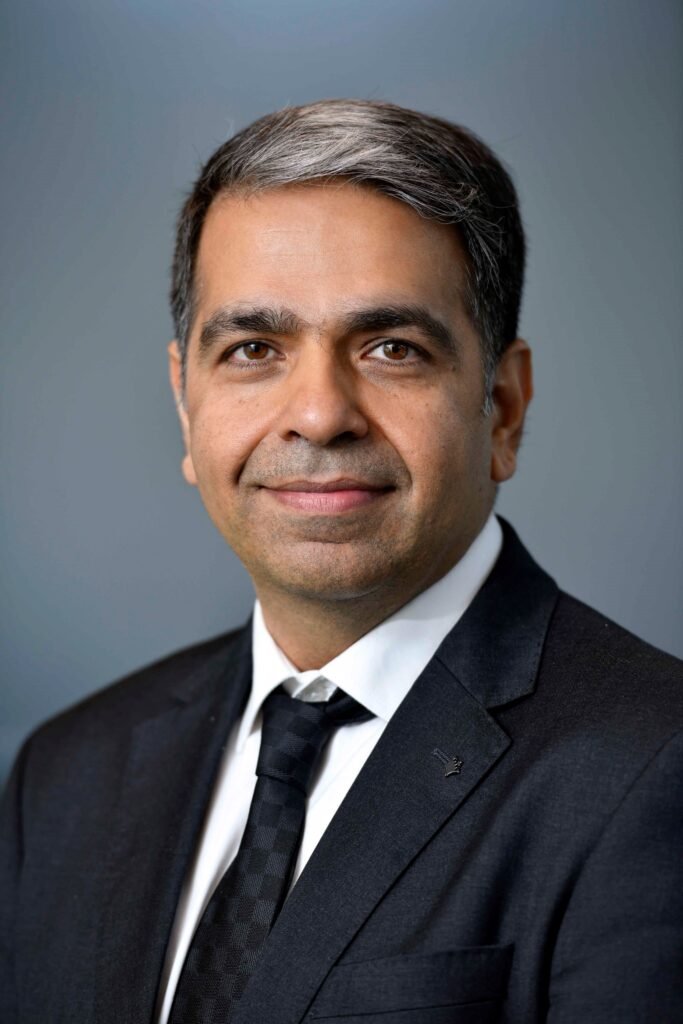
Akshay Chhabra, Chairman & Managing Director, 1Point1 Solutions, said, “AI is no longer the technology of tomorrow; it is the responsibility of today. This AI Appreciation Day, I believe the conversation must move beyond celebrating what AI can do, to owning what it should do, especially when deployed at enterprise scale. Today, AI powers millions of customer interactions across industries, languages and geographies, influencing decisions that shape trust, performance and business outcomes. In this environment, capability alone is no longer the differentiator. Responsible execution is. The next frontier isn’t building more intelligent systems; it’s building accountable ones: transparent, explainable and governed with the same discipline and integrity we expect of human judgment. Without that foundation, efficiency becomes risk, not progress. At 1Point1 Solutions, we believe AI’s true value lies not in automating work, but in delivering trusted, measurable outcomes through the right balance of technology, governance and human judgment. AI creates possibilities. Trust converts them into business value.”

Siteshwar Srivastava, Chief Technology Officer, Alankit Limited, shared,“The conversation around AI has evolved from experimentation to delivering tangible business impact. Today, AI is enabling organisations to improve operational efficiency, enhance customer experiences, make more informed decisions, strengthen cybersecurity, automate business processes, and deliver services more effectively. At Alankit, we believe technology creates meaningful outcomes only when it is supported by trust, strong governance, and human oversight. Our focus remains on ensuring data security, regulatory compliance, efficient workflows, responsible AI adoption, and secure digital transformation. As AI becomes increasingly embedded across industries, organisations must prioritise its responsible use to address real-world challenges and create sustainable long-term value. AI Appreciation Day serves as a reminder that innovation is most impactful when it empowers people, strengthens businesses through secure and scalable technology, and fosters greater confidence in the digital ecosystem.”

Surjeet Thakur, Founder and CEO, TrioTree Technologies, clarified, “AI is fundamentally reshaping healthcare by breaking down the data silos that have long slowed patient care. Through intelligent interoperability, disparate health records can finally communicate, enabling faster diagnoses, reducing redundant tests, and giving clinicians a complete patient picture in real time. At TrioTree, we believe true healthcare transformation begins with connected, intelligent systems.”
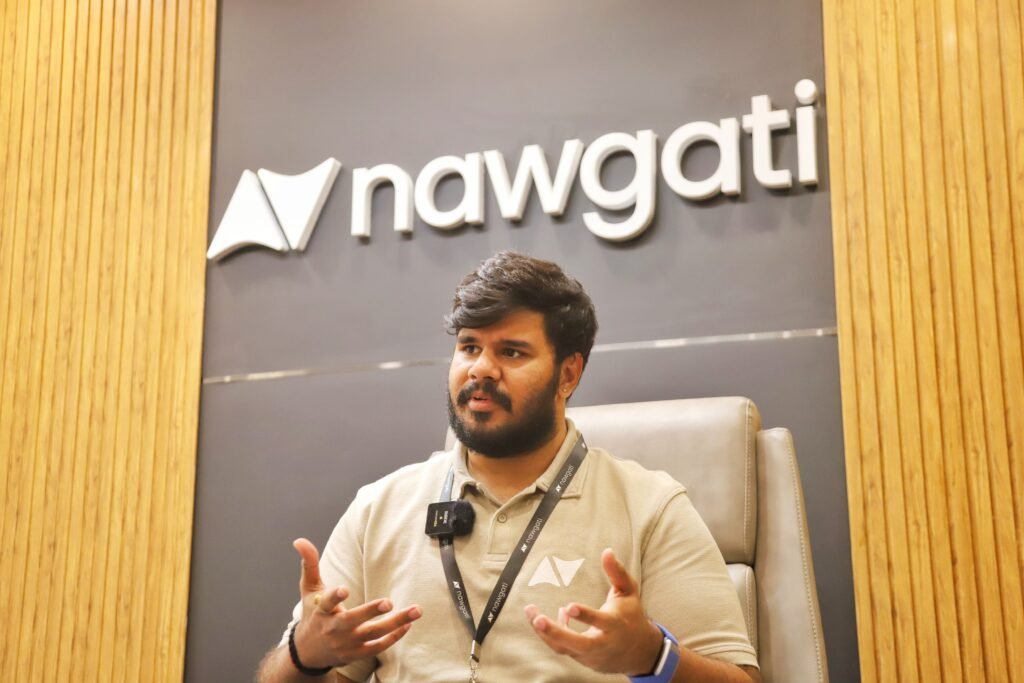
Vaibhav Kaushik, co-founder & CEO, Nawgati, said, “AI is no longer a futuristic add-on for mobility; it’s becoming the backbone of how fuel and energy networks operate. From predictive demand forecasting to smarter route and inventory planning, AI is helping the industry move from reactive to proactive decision-making. At Nawgati, we see this shift not as automation replacing people, but as intelligence empowering better and faster choices.”

Ritesh Kapadia, Field Chief Technology Officer, iLink Digital, shared, “The conversation around AI has matured significantly over the past two years. Enterprises are no longer asking whether they should adopt AI; they are asking how to deploy it securely, responsibly, and at scale. As AI moves from experimentation to execution, success will depend less on having the latest models and more on having the right data, cloud, and application foundations to operationalise it. At iLink Digital, we believe AI creates value only when it solves real business problems, improves decision-making, and delivers measurable outcomes. As we mark AI Appreciation Day, it’s worth recognising that AI’s true potential lies not in the technology itself, but in the tangible impact it creates for businesses and the people they serve.”

Revathi Balasubramaniyan, Data Engineering Manager, LatentView Analytics, discussed, “AI has fundamentally changed the way I approach problem-solving, cutting down the time spent on repetitive tasks and helping focus more on strategy, innovation, and delivering business impact. Whether it’s accelerating data engineering workflows, generating insights faster, or prototyping solutions, AI has become a trusted collaborator rather than just a tool. As we begin working with intelligent systems that proactively recommend actions and automate decision-making, the most valuable skills in this era will be curiosity, critical thinking, and adaptability to work alongside AI responsibly and effectively.”

Vivek Soundarapandian, Director – BI & Visualization, LatentView Analytics, commented, “AI has changed the way data democratization is evolving in the analytics space. A typical business intelligence project that would take months can now be completed in weeks. AI is especially upgrading certain workflows by consolidating the intelligence acquired from best practices and years of experience. AI-driven analytics is not just about tech advancements but how it resolves business problems thereby accelerating data-driven insights.”

Vinodhini Baskaran, Data Analytics Manager, LatentView Analytics, said, “AI hasn’t just changed our tools, it has reframed how we solve problems. The goal is not just working faster but asking deeper questions. We must view AI as a launchpad for human ingenuity, transitioning from passive users to active governors. The next frontier of analytics isn’t just about faster predictions; it’s about responsible ones. AI provides the engine, but human intervention provides the purpose, ethics, and judgment that ensure technology serves us wisely.”

Chaitra Vedullapalli, Co- Founder & President, Women in Cloud, discussed, “Artificial intelligence is becoming the operating system of every industry, but its greatest impact will not come from replacing people. It will come from expanding what people can achieve. Healthcare will move from treating illness to predicting it. Education will shift from standardized learning to personalized pathways. Manufacturing will build smarter, more resilient supply chains. Governments will deliver faster, more accessible public services. Financial institutions will democratize access to capital, while agriculture will produce more with fewer resources. My unreasonable belief is that this new era demands a new leadership paradigm. To fully realize AI’s promise, we must activate ICONIC Leadership across every sector so more people can create opportunity, elevate others, and build lasting legacies. When AI amplifies human potential and leaders amplify human opportunity, we build an economy where innovation creates prosperity for everyone.”
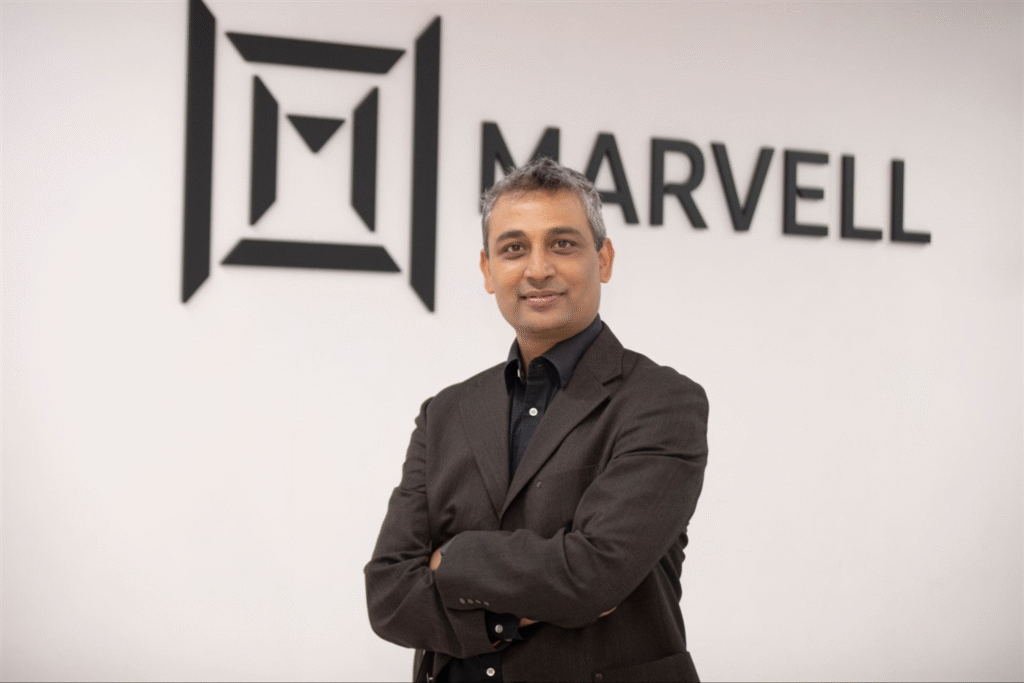
Navin Bishnoi, VP & India Country Manager, Marvell Tech, commented, “The biggest advances in AI today are not just in models, but in the infrastructure that powers them at scale. This is driving a shift toward highly optimized custom silicon and high-speed connectivity, which are critical to making AI performant, scalable and sustainable. As organizations build larger AI clusters and AI factories, the ability to move vast amounts of data efficiently is becoming as important as the ability to process it, and industry’s major challenge today is ensuring data can move efficiently across increasingly distributed data center environments. As a result, connectivity has become a critical determinant of AI performance, efficiency and scale. Advances in optical interconnects and high-speed networking are essential to eliminating bottlenecks and enabling AI systems to operate seamlessly across thousands of interconnected resources. The next wave of AI innovation will depend on infrastructure capable of delivering high-bandwidth, low-latency communication at unprecedented scale, unlocking faster, more efficient and more powerful AI systems.”

Amit Shrivastav, Global Head AI GTM & Director Product Management, Kellton Tech, said, “We are moving from AI that answers to AI that acts. Agentic systems are no longer demonstrations in a lab; they are reshaping how enterprises operate across BFSI, logistics, aviation, retail, and the public sector. But the deeper shift is one of ownership. For India, the question is no longer whether we adopt AI, but whether we build it. Sovereign AI is not techno-nationalism; it is the recognition that models trained on our languages, our data, and our context will serve our billion-plus citizens far better than imported intelligence ever could. The talent exists, the demand is enormous, and the infrastructure is maturing. The next decade will reward nations that treat AI as critical national capability rather than a service to be rented. India has the rare chance to lead not by following, but by building intelligence that reflects who we are. That is the transformation worth committing to.”

Carlin Crasto, CTO, 86400, discussed, “The systems powering today’s digital economy were built for a different era. Payment infrastructure that once handled predictable transaction volumes now supports millions of real-time decisions every day, making AI the intelligence layer that keeps it secure and resilient. Its biggest impact has been on fraud. Instead of identifying suspicious activity after money has moved, AI evaluates risk as the transaction happens, helping stop fraud before it occurs while allowing genuine payments to go through with minimal friction. That balance between security and speed is reshaping what modern payment infrastructure can deliver. Payments have always been built on trust. As AI becomes more deeply embedded in payment infrastructure, explainability and accountability will matter just as much as intelligence itself.”

Arani Chaudhuri, Co-Founder & CEO, AI Library, discussed, “AI has moved from experimentation to production across business functions, and the clearest proof is in the results businesses are now seeing. In sales, AI agents are qualifying leads with twice the effectiveness of traditional methods while cutting costs by a third. In finance, accounts payable systems now process invoices with 99% accuracy and make approval decisions with 95% accuracy, flagging only genuine cases for human review and freeing teams from thousands of hours of manual work. In marketing, AI-driven personalization is improving campaign ROI by over 30%. These are not marginal gains. They represent a step change in how work gets done. This is driving a deeper shift in the economics of technology services. For decades, the industry sold effort through billable hours and headcount. AI is changing that model. Clients no longer want to buy time, they want to buy outcomes. The providers that will define the next decade are those delivering measurable results through AI agents supervised by skilled humans, and pricing their services based on outcomes rather than hours. For India, this is a generational opportunity to move up the value chain and compete on expertise, not cost.”
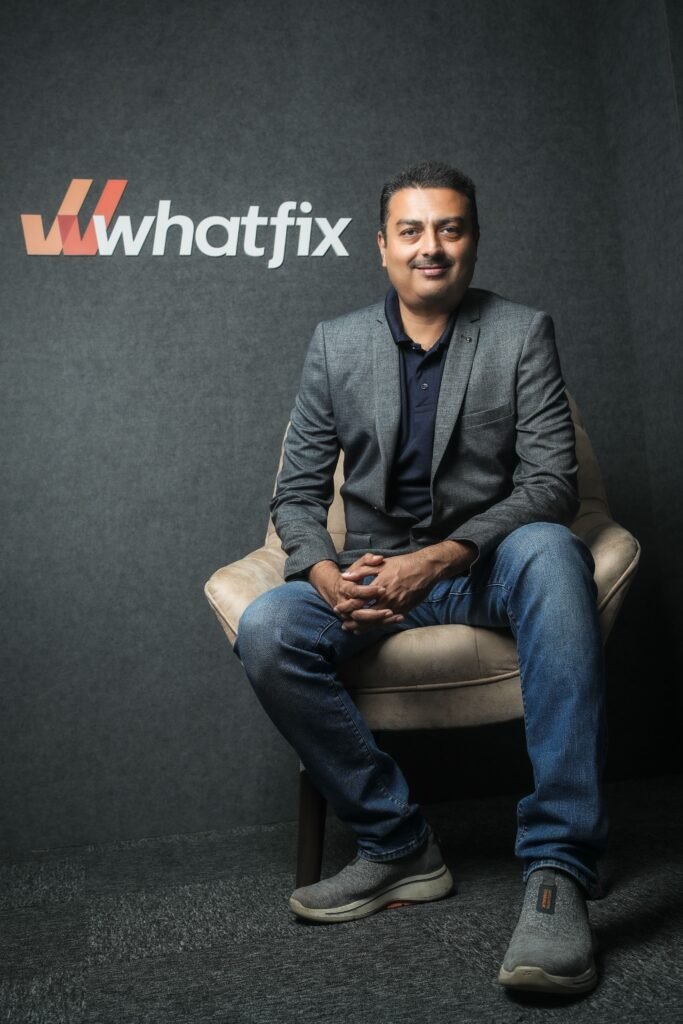
Khadim Batti, CEO and Co-Founder at Whatfix, said, “AI Appreciation Day is a reminder that the biggest gains are still ahead, particularly for the organizations willing to build the trust to get there. We’ve seen this pattern before. Every major technology wave, from the internet to the cloud, has unfolded in several acts: infrastructure first, platforms second, and enterprise transformation last. This happens because business-critical workflows demand a level of reliability that takes time to earn. Building that trust starts with how we deploy AI. Too often, AI fatigue gets blamed on the tools themselves, when it’s really an implementation failure. Employees are left to guess at boundaries, prompt their way through ambiguity, and absorb friction that good design should have removed. The organizations that will lead when AI reaches its next inflection point will be the ones that treat AI as an operating model transformation, rethinking how work gets structured so AI can execute autonomously within clear guardrails, while employees focus their energy on judgment, strategy, and creativity. That’s the vision behind Whatfix AI. Powered by ScreenSense, our AI engine that understands context and intent, Whatfix AI embeds agentic intelligence directly into enterprise workflows. Rather than expecting employees to navigate an ever-growing collection of AI tools, AI agents operate within enterprise guardrails to deliver contextual guidance, accelerate execution, surface adoption friction, and continuously optimize how work gets done. The real promise of AI is that intelligence becomes an invisible part of the operating model, empowering people with the right support, at the right moment, while organizations retain the governance and control needed to scale AI with confidence. When organizations get this right, AI starts to feel less like another application employees have to learn and more like a trusted collaborator woven into every workflow. It stops competing for people’s attention and starts compounding their impact, giving them back time to focus on the work that requires unique human judgment, creativity, and strategic thinking.”

Sharda Tickoo, Country Manager for India and SAARC, TrendAI, shared, “AI has become the frontline of enterprise defence, reading through logs at a scale no human team could match. However, the uncomfortable truth is that the same intelligence defending our systems is being weaponized against them and readiness is still lagging. We celebrate AI’s speed while ignoring the velocity at which threats are evolving. As we move from AI to agentic systems, the attack surface does not just expand but becomes dynamic and increasingly difficult to govern. Complexity compounds risk exponentially. A single compromised agent can orchestrate attacks across your entire infrastructure at machine speed, while defenders still operate in human time. This is where the conversation shifts from resilience to anti-fragility, which means building systems that learn, adapt, and grow stronger through continuous threat detection and management. It demands governance frameworks embedded from the start, not bolted on afterward. It requires guardrails that constrain agent behaviour at runtime, continuous monitoring of autonomous systems, and critically, human oversight, accountability, and traceability woven through every layer. The enterprises that will lead the next era are those prepared for this reality. They are building AI-native security architecture, implementing continuous threat exposure management, and treating human judgment as a foundational control. That is the inflection point we must reach, where speed and safeguard move in tandem, where governance enables innovation rather than constrains it.”

Umesh Shah, Director, Orient Technologies Limited, said, “AI Appreciation Day is a moment to recognise AI’s potential, acknowledge the responsibility that comes with its adoption, and strengthen the relationship between people and technology. At Orient Technologies, we are bringing these principles to life by combining AI-powered ITSM, automated support processes and robust governance to transform service desks into strategic centres of innovation that deliver faster resolutions, better user experiences and greater business value.”

Sandip Weling, Whole-time Director & Chief Business Officer – Global Retail Business, Aptech Limited, clarified, “As Aptech marks 40 years of empowering learners through education and skilling, we believe the future of AI is not about replacing human potential but augmenting it responsibly. As AI reshapes the world of work across technology, business, AVGC-XR, beauty and wellness, hospitality, and the creator economy, Aptech’s priority is to build future-ready talent capable of applying AI with skill, creativity, judgement, and responsibility. A human-first approach will ensure AI becomes a catalyst for innovation, enabling the next generation of creators to lead India’s digital and creative economy with confidence.”

Nitish Gopalani, Co-Founder, FonadaLabs said, “AI is no longer just an experiment, it has become a part of how businesses run every day. What excites me most is how quickly companies of all sizes in India are using AI to solve real problems: answering customer calls, replying on WhatsApp and helping people in their own language, around the clock. At FonadaLabs, we see this every day. Businesses are moving away from old, rigid systems and using smart voice agents that speak 32+ Indian languages and respond instantly. But AI must be used responsibly. The companies that win will be the ones that use AI to save time and cut costs while keeping customer data safe and building real trust. On AI Appreciation Day, it’s worth remembering that AI is not here to replace people. It is here to help them work smarter and focus on what truly matters.”

Rajesh Ramdas, Senior Director, Field Engineering (India), Databricks mentioned, “India’s AI story is no longer about experimentation; it is about execution at scale. On AI Appreciation Day, we see a market that has moved past pilots into production, with enterprises across industries building agents that reason over their own data, not generic models trained on the open internet. The winners in this next phase will not be the enterprises using the best models, but those that bring the most relevant context to those models. This is where contextual intelligence matters. This shift is powered by unified, governed and trusted enterprise data. Organizations that build this foundation today will be best positioned to translate AI investments into outcomes that hold up at scale. India’s advantage is talent, with some of the world’s deepest data science and engineering pools now shipping AI systems that move the needle on revenue, cost, and experience. The next 12 months will separate enterprises that ran AI pilots from those that built their data foundation, because that foundation is what will determine who wins.”
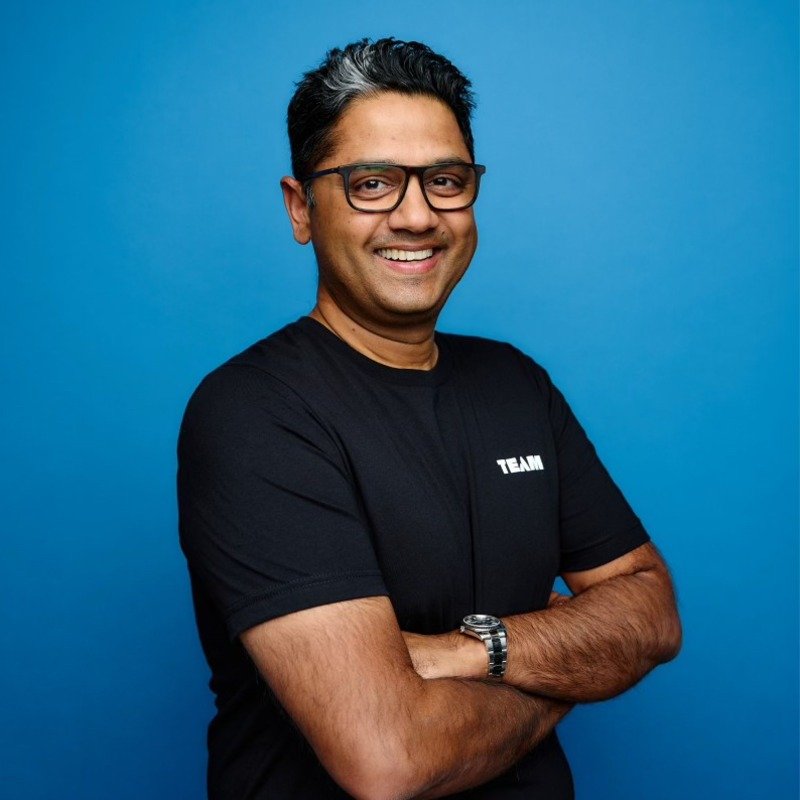
Vikram Rao, CTO Enterprise & Chief Trust Officer, Atlassian said, “On National AI Day, the question I keep coming back to isn’t ‘how fast can we build?’ It’s ‘how do we build in a way that the largest companies in the world can actually trust?’ Two things have to be true at once. First, trust: enterprise customers need AI that is auditable, compliant, and does exactly what you say, nothing more, nothing less. That’s table stakes for the largest companies in the world. Second, context: The Teamwork Graph is our key differentiator, connecting over 10 billion data objects through more than 40 billion relationships. When AI has that as its foundation, you don’t just get faster answers, you get materially better ones. In our testing, 44% better answer quality, using 48% fewer tokens. Context is what makes the AI better, Trust gives you the confidence to adopt it. Together, that’s the platform enterprises have been waiting for.”
Send news announcements/press releases to:
editor@thefoundermedia.com
About The Author